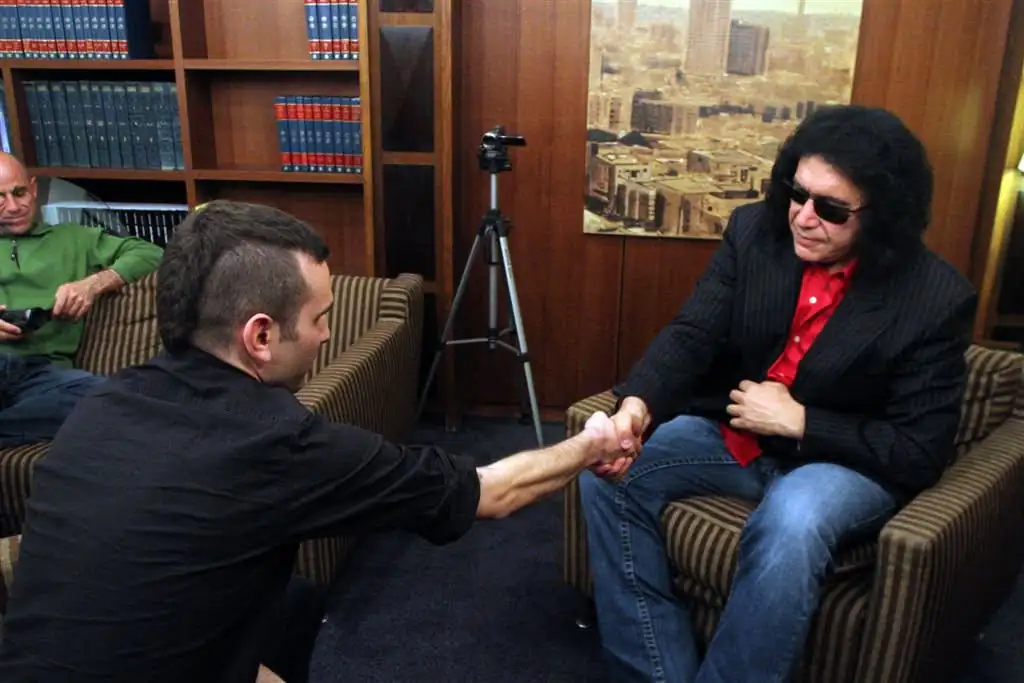
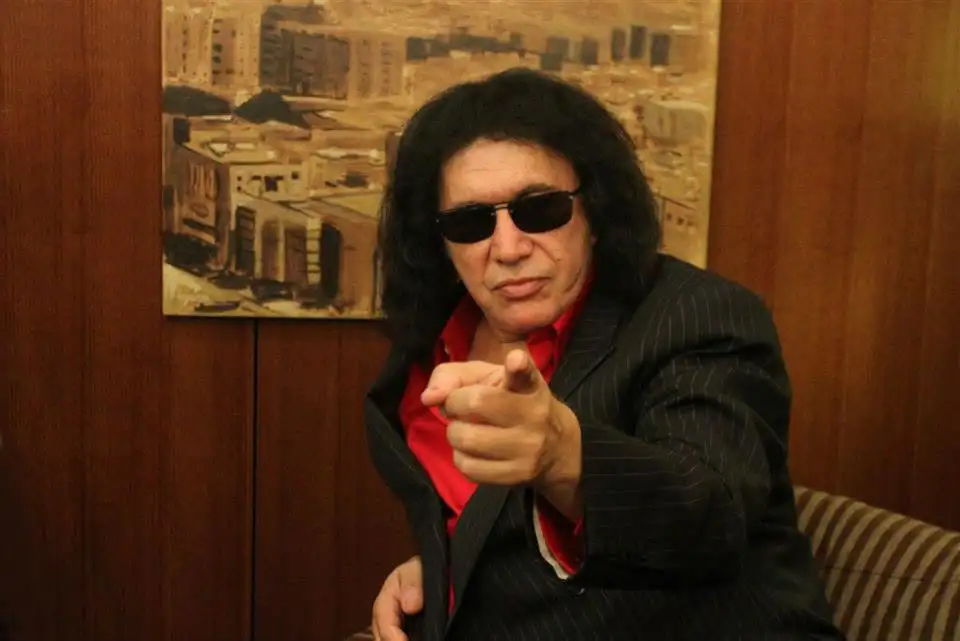
Originally Published by Ynet During Simmons’s Emotional 2011 Return to Israel, This Rare Long-Form Interview Captures the Kiss Icon Just Days After Discovering a Brother and Three Sisters He Never Knew He Had.
By Or Barnea
Originally published in Hebrew by Ynet on March 27, 2011. Translated into English and republished by Lemur Magazine in 2026.
A Note From 2026
Gene Simmons turned 77 this week, which felt like a good reason to go digging through the archives.
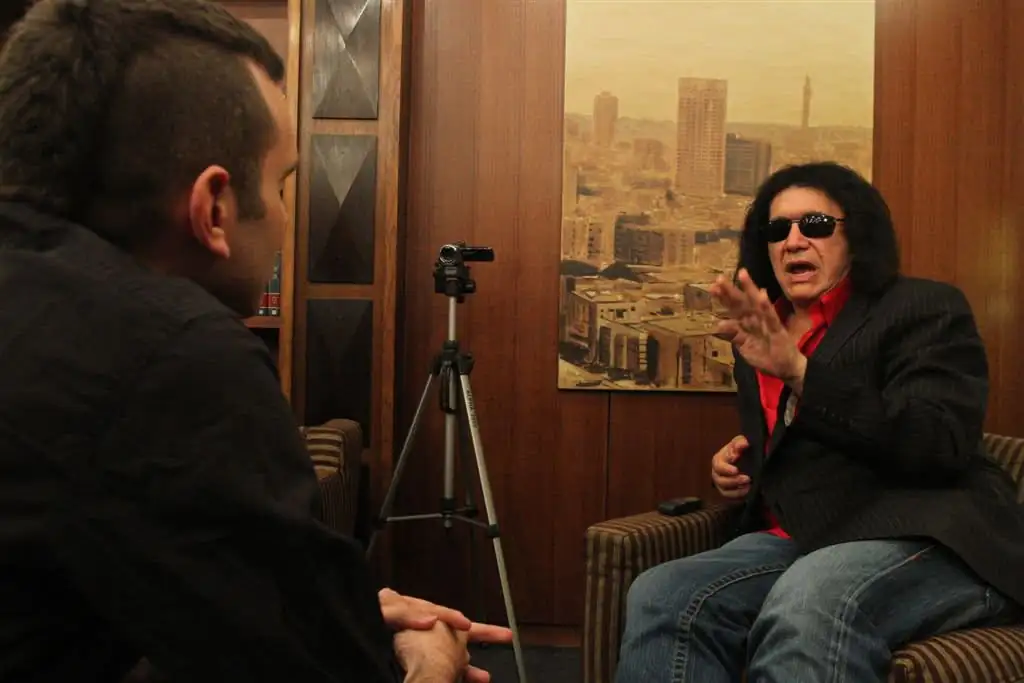
I interviewed him in March 2011, during my years as a culture journalist at Ynet. Simmons had returned to Israel for the first time in more than five decades to film an episode of Gene Simmons Family Jewels. I met him at the Dan Hotel in Tel Aviv, two days after his family surprised him with a brother and three sisters he never knew existed.
As far as I know, he never gave another Israeli publication an interview this long and open. I wanted this small piece of Israeli rock history to exist in English as well, beyond the original Hebrew page.
The interview below has been translated with minor edits for flow. Ages, family details and television references remain as they appeared in 2011.

The Original Interview
Gene Simmons arrived in Israel the previous week for what he believed would be a roots trip. Cameras were following his family for their reality series, and he expected to tour Tirat Carmel, where he spent his early childhood, and visit several historic sites.
What Simmons did not know was that his family, including his mother, had prepared a surprise that would change his life.
On Friday evening, the family went to dinner in Tel Aviv. As Simmons entered the restaurant, a man approached and offered his hand. Behind him stood several other people, watching. Simmons assumed the man was there to escort them to their table.
Then his wife, Shannon Tweed, spoke.
“Gene, this is your brother, Kobi.”
Simmons’s father had left him and his mother when Gene, then still Chaim Witz, was seven. Mother and son moved to the United States, where Simmons eventually formed KISS and became one of the biggest rock stars in the world.
KISS sold more than 100 million albums, while Simmons built a business empire by placing the band’s painted characters on almost every imaginable product, from credit cards to coffins.
Following his father’s death, Simmons’s partner and children discovered that he had three half-sisters and a half-brother in Israel. His father had gone on to have children with other women after leaving Simmons and his mother.
Simmons also learned that his mother, then 85, had visited Israel 25 times since they left. “I always thought she was coming to bathe in the Dead Sea,” he told me.
In fact, she had returned to see his father. Despite the pain he caused her, she never stopped loving him.
“If lifelong love really exists, that is what she felt for him,” Simmons said.

Our interview took place two days after the discovery. Simmons had just returned from spending several hours with his newly discovered siblings at Kibbutz Eyal, where they had grown up.
The enormous rock star had filled the room with his presence only minutes earlier. Now he was speaking publicly about what had happened for the first time. He struggled to explain the emotions. He removed his black sunglasses and fought back tears.
“It was overwhelming. I always thought I was an only child, and suddenly I discovered that I have this amazing brother and these amazing sisters. It fucked with my head.”
“I Assimilated, Like Jews Always Have”
Now 61, four decades after beginning his campaign to conquer the world, Simmons was preparing to return to the United States with the knowledge that he had siblings in Israel.
For all those years, he had refused to return to the country where he lived until the second grade.
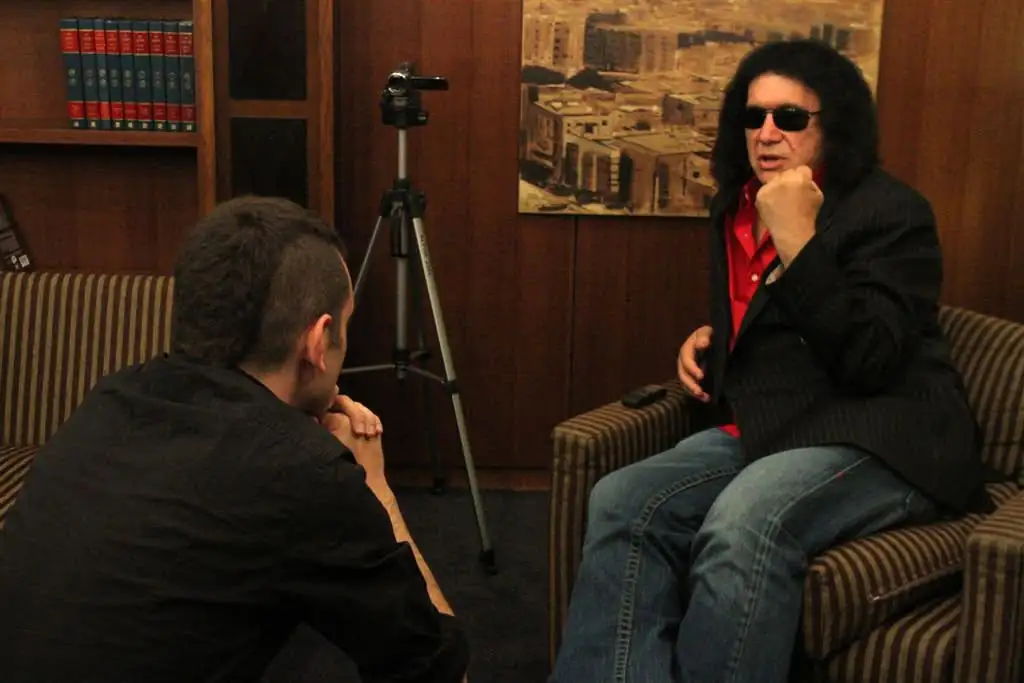
“America gives you an opportunity no other country can give you: the chance to climb the highest mountain,” he explained. “Your name can be Schwarzenegger. It does not matter how big you were in Austria. That means nothing. If you come to America and succeed, you are king of the world.
“When I arrived, I could not speak English and I was a foreigner, but I never stopped trying to climb higher. I was worried that if I stopped, or took time away to visit Israel, it would all end. But 52 years later, it was time to come home.”
What is your strongest memory of home?
“I remember a boy who lived down the street throwing rocks at my head. My mother ran after him and beat the hell out of him. She lifted him off the ground with one hand and started hitting him like his own mother probably never had, but should have.
“I am sure he stopped bullying children after that. It is a wonderful memory because it showed me how much my mother loved me. If you have a mother’s love, anything is possible.”
When you began to succeed, did you connect it in any way to being Israeli?
“No. Israelis may want to hear that I did, but it is not true. In America, it does not matter where you came from or what your background is. They do not care.
“I decided at a young age to dress British and think in Yiddish. In other words, I kept my culture and identity secret and did what Jews have done throughout history. I assimilated.
“You change your name and stop making the guttural ‘khhh’ sound because the rest of the world does not speak that way. To succeed, you need to learn the language of power. Hebrew is not that language, at least not yet. It is the language of God and history. When China becomes more powerful, well, I am learning Mandarin.
“Israel is my mother and father. It is connected to my soul. But the rest of the world does not care about that. Everyone has a past and a culture. At the end of the day, you need to shut up and show the world what you are worth.”
Looking back, can you identify one point in your life that makes you prouder than all the others?
“Right now. Tomorrow, I will be proudest of tomorrow.
“The most important thing is life itself. My mother always says that every day above ground is a good day, and that should be your proudest day. The past does not matter.
“When you are alive, every opportunity in the world is still available to you. You can never lose while those opportunities remain ahead.”
A Small “No” Is the Same as a Big “No”
Simmons’s relentless attitude helped turn him into the larger-than-life figure he had become. His name may not have been familiar to every Israeli outside the rock audience, but in the United States, his charisma had made him one of the most recognizable rock stars of all time and the leader of one of music’s most successful bands.
Simmons is a natural performer. He knows when to smile for the camera, when to throw in a few Hebrew words and how to turn every answer into a lesson about life. Every so often, he directed a private joke toward Tweed, the former Playboy model sitting beside him.
Simmons had famously claimed to have slept with thousands of women, but Tweed was the woman who captured his heart. They had two children, 21-year-old Nick and 19-year-old Sophie.
Their family life in Beverly Hills, and now in Israel, was documented in Gene Simmons Family Jewels. At the time, the show had become one of television’s longest-running celebrity reality series and had already been renewed for a seventh season.
I am a new father. Do you have any advice for raising children?
“Certainly. Do not be your children’s friend. Be their father.
“Remember that a small ‘no’ is the same as a big ‘no.’ If your son asks, ‘Dad, can I rob a bank and kill people?’ No. ‘Can I move my toy from here to there?’ No. The no needs to be the same no.
“In American sitcoms, you see teenagers rolling their eyes and sighing at their parents. I would take those eyes back out of their skulls. I gave you those eyes. They are not yours. They are mine.
“You are not allowed to slam the door to your room because it is not your room. It is mine. I bought it. Even the shit you take belongs to me. I paid for the food that went into your mouth.
“You will respect your mother. Your father, maybe a little less,” he laughed. “If you ever roll your eyes or upset your mother, then oy vey.
“With a father, it is better to be feared than loved. Mothers are different. And ‘wait until your father gets home’ is a good sentence. It means something.”
To sum it all up: more than 100 million albums sold, millions of fans, money, fame and countless adventures. One word.
“Me!” he shouted.
“Everything begins and ends with you. You are only valuable to a team when you give it everything you have.
“When you become a champion, and the cameras have been turned off and the people who handed you the awards have gone home, will you wake up the next morning and try to break your own record? That is true championship. It is not about what happens while the cameras are there.
“‘Me’ is a good word. People will try to tell you it is a bad word, but anyone who thinks ‘me’ is a bad word is a loser.
“You will receive the respect you deserve only when you plant your foot on the ground and piss on it like an animal marking its territory. Only then will it belong to you.
“Tell yourself, ‘I am the greatest of them all, and damn it, I am right.’”
One More Thing About “Me”
Three years after this interview, Simmons published Me, Inc.: Build an Army of One, Unleash Your Inner Rock God, Win in Life and Business.
The title makes his final answer in that Tel Aviv hotel room sound less like a spontaneous punchline and more like the beginning of a book proposal.
Published in 2014, Me, Inc. turns that single word into a complete business philosophy. Simmons presents 13 principles for building a career, educating yourself and treating your abilities, reputation and ideas as a company of their own.
I recommend it to anyone standing somewhere between entrepreneurship, music and entertainment. You do not need to agree with every sentence, or adopt his method of marking territory, to take something valuable from it.
At the very least, it may help you walk with your chest a little higher.
Reading the interview again now, it feels as though Me, Inc. had already begun in that hotel room.